
Quick answer: Referral asks feel awkward when they're generic and badly timed. Your customer records already know the un-awkward moments — the just-finished job with a glowing reply, the third repeat booking, the one-year anniversary. Trigger a specific, small ask at those peaks, give the customer words and a link to pass along, thank referrers after the fact instead of dangling bounties before, and always close the loop. Word of mouth doesn't need charisma; it needs a system.
Ask any local business where their best customers come from and the answer is nearly universal: referrals. Ask what their referral system is and the answer is a shrug — "people just tell their friends." The number-one acquisition channel, completely unmanaged, because doing anything about it feels like begging.
The awkwardness is real, but it's not inherent to asking — it's a symptom of asking the wrong way: vague requests, sprayed at everyone, at no particular moment. Fix the timing, the specificity, and the follow-through, and the ask stops feeling like begging and starts feeling like what it actually is: giving a delighted customer a way to help a friend.
The timing is the whole trick
There is a moment in every good customer relationship when a referral ask is not just acceptable but welcome — the moment they're actively glad they found you. The furnace works, the photos arrived, the back pain is gone. At that peak, "do you know anyone else who needs this?" reads as confidence. Three weeks later, the same words read as a sales email.
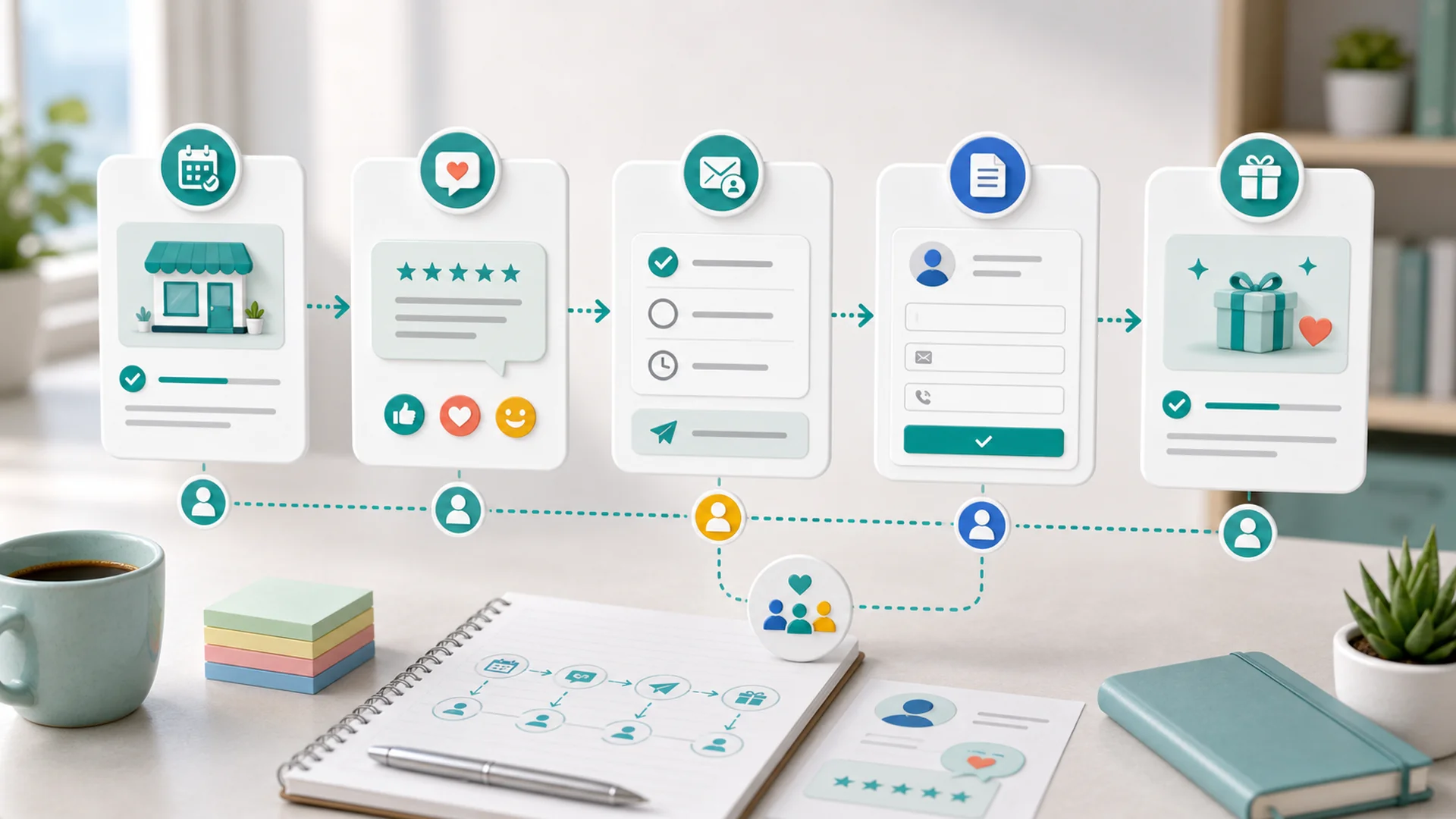
Most businesses miss the peak because nobody's watching for it. But your customer records are: every completed booking, opened email, enthusiastic reply, and repeat purchase lands on the customer's timeline — and activity-driven follow-up is exactly the machinery for acting on it.
Four moments your records already know about
Your post-job follow-up goes out; the customer replies "you guys were fantastic." That reply is the single highest-conversion referral moment that exists — answer the thank-you, then ask, same thread, same day.
A second or third booking is loyalty announcing itself. Repeat customers refer at multiples of one-timers — they have evidence, not just an impression. The third completed booking is a reliable trigger to ask.
Someone who just left a five-star review has already referred you to strangers. Thank them personally and make the private version easy: "that review made our week — if you've got a neighbor who needs the same fix, this link skips them straight to the front."
A year since the kitchen remodel, the wedding shoot, the first class — visible in their history. "It's been a year since the remodel — hope you're still loving it" is a warm check-in that earns its gentle second sentence.
Make the ask small, specific, and worded for them
"We appreciate referrals!" asks the customer to do your marketing. A real ask does three things:
- Names the who. "If a neighbor's AC is on its last legs" beats "anyone you know." Specific prompts trigger actual names in the customer's head — that's the mechanism.
- Shrinks the action. One forwardable sentence plus a link. "Feel free to pass along this link — mention your name and we'll take care of them" is a ten-second favor, not an assignment.
- Gives them the words. Most happy customers don't refer because they don't know what to say. Hand them the sentence: "She does our books — we stopped dreading tax season." Forwardable beats describable.
Build the system: triggers, tasks, and a trackable door
Systematize the two halves separately — the asking and the receiving:
- The personal tier: for your best customers, the trigger creates a task, not an email — "Maria's third cleaning completed + glowing reply → ask personally this week." A human ask from the owner converts best and can't be automated without becoming what it's replacing.
- The scaled tier: for the broader happy base, a journey sends the ask automatically at the trigger moments above — written like a person, one ask, no nagging sequence.
- The trackable door: referred friends arrive at a simple page with a short form — "who sent you?" included — wired so submissions land on customer records with the referrer recorded. No tracking, no system: you can't thank what you can't see.
Reward gratitude — don't purchase advocacy
The bounty model ("get $50 for every friend!") works for apps and backfires for trust businesses: it converts a friend's honest recommendation into a transaction, and everyone involved can feel it. The alternative that compounds:
- Thank after, don't dangle before. A surprise thank-you — handwritten note, a credit on their next visit, the good bottle — after a referral closes lands as gratitude. The same value promised in advance lands as a commission.
- Take care of the referred friend. The referrer's real reward is looking good: their friend got the priority slot and the careful treatment. Protect that and referrers become repeat referrers.
- If you do advertise an incentive, give both sides something — it lets the referrer share a benefit rather than collect on a friend, which keeps the social math clean.
Close the loop — the step everyone skips
When a referral becomes a customer, tell the referrer. "Your neighbor booked us — thank you, that means a lot" takes thirty seconds and is the difference between a one-time favor and a habit. It's also the moment your thank-you gesture arrives, unannounced and therefore meaningful.
Then watch the channel like the asset it is: referral-sourced customers in your records, their close rate against other sources (spoiler: it won't be close), and which trigger moments produce the most asks-that-land. Five minutes in your weekly numbers ritual covers it — and the segment of proven referrers is your most valuable list, worth treating like the VIP segment it is.
Key takeaways
- Ask at the peak: the happy reply, the third booking, the fresh review, the anniversary — and the awkwardness disappears.
- Your customer timeline already records those moments: tasks and journeys turn them into triggers.
- Shrink the ask: make it specific ("a neighbor with an old AC"), small (one link), and forwardable (give them the sentence).
- Personal asks for your best customers, automated asks for the broader happy base: never the reverse.
- Thank referrers after the fact instead of dangling bounties: the referrer's real reward is their friend being treated well.
- Track the referrer on every new record and close the loop: unthanked referrers don't refer twice.
Frequently asked questions
How soon after a job is too soon to ask for a referral?
If they've signaled happiness — a thank-you, a review, an enthusiastic reply — same day is ideal, not too soon. With no signal yet, let the follow-up message do its job first; asking before you know they're satisfied is how horror stories get referred instead.
Should I offer a discount for referrals?
Prefer the surprise thank-you after a referral closes over an advertised bounty before. If your market expects a stated program, make it two-sided — both the referrer and the friend get something — and keep the value modest; the relationship, not the rebate, is what's doing the work.
What if I automate the ask and it goes to someone who had a bad experience?
That's why the trigger should include a satisfaction signal, not just "job completed" — completed-plus-positive-reply, or completed-plus-repeat-booking. And every automated send respects the record: open complaints pause the journey. Asking an unhappy customer for referrals is the one mistake this system exists to prevent.
How do I track referrals without interrogating new customers?
One optional form field — "who should we thank for sending you?" — phrased as gratitude rather than attribution. Most referred customers volunteer it happily; it's a brag on their friend's behalf.
Do referral programs work for premium services, or do they cheapen the brand?
Premium services run on referrals more than any other tier — what changes is the form. Drop stated incentives entirely; the system becomes timing, personal asks, immaculate treatment of referred clients, and memorable thank-yous. The machinery is identical; only the currency is.
The timeline, the triggers, the tasks, the journeys, and the forms all live in one Faster workspace — which is what makes "systematized word of mouth" a setup, not a job. Wire the four moments this week; the first un-awkward ask is probably already sitting in your follow-up replies.